All published articles of this journal are available on ScienceDirect.

The Enablers and Barriers for Effective Transition to Practice in the Emergency Department: The Perspective of New Graduate Nurses

Abstract
Introduction
The transition from nursing student to New Graduate Nurse (NGN) is a critical period marked by increased responsibility and professional adjustment. This transition is particularly challenging in Emergency Departments (EDs), where high-acuity care requires rapid decision-making, prioritization, and clinical confidence. This study aimed to examine the barriers and enablers influencing the transition of NGNs into ED practice in Vanuatu.
Methods
A mixed-methods design was employed using a survey adapted to the Vanuatu context. Data were collected from 47 NGNs working in EDs across five hospitals in Vanuatu (response rate: 94%). Quantitative data were analysed using descriptive statistics, while qualitative responses were analysed thematically to identify key barriers and enablers affecting transition.
Results
Barriers to transition were categorized into organizational, personal, and family/relational factors. Key challenges included inadequate orientation, high workload, insufficient supervision, stress, and lack of confidence. Enablers were grouped into organizational and personal factors and included supportive teamwork, mentorship, fair task allocation, and ongoing learning opportunities. Most NGNs reported that structured support and exposure to diverse emergency cases improved confidence and job satisfaction.
Discussion
The findings highlight the complex interaction between individual readiness, workplace support, and health system constraints in shaping NGNs’ transition experiences. Compared with international studies, workforce shortages and limited supervision in Vanuatu appear to intensify transition challenges, underscoring the need for context-specific support strategies.
Conclusion
NGNs transitioning into ED practice in Vanuatu face significant challenges alongside important enabling factors. Strengthening structured orientation, supervision, and continuous learning opportunities may improve NGN preparedness, support professional development, and enhance patient care outcomes in emergency settings.
1. INTRODUCTION
The transition from nursing student to Registered Nurse (RN) can be very demanding. This is a key stage for New Graduate Nurses (NGNs) who mature as professionals as they transition from student to nurse [1]. This period is stressful and demanding because NGNs enter the workforce feeling unprepared. In particular, NGNs must quickly adjust to the working conditions and acquire essential knowledge, skills, and confidence [2]. NGNs still need sufficient learning experiences, both theoretical and practical, to build on their foundational knowledge and develop their skills. Additionally, continued learning and mentorship are crucial to support their professional growth and to instil confidence as they transition from the classroom to real-world clinical practice [3].
The transition into specialty practice areas, such as the Emergency Department (ED), may pose additional challenges [4]. This is primarily due to emergency care's high-acuity, unpredictable nature, which demands rapid clinical decision-making, effective prioritization, and resilience under pressure skills that NGNs may not have fully developed [5]. Unlike those transitioning to medical or surgical practice, NGNs transitioning to specialist practice often lack employment readiness following graduation [4]. Many countries have adopted internship programs to facilitate the transition from student to professional and prepare NGNs for their new career. A nursing internship program is a comprehensive educational framework that provides theoretical instruction and hands-on clinical experience. Such a program aims to provide NGNs with critical knowledge, essential technical skills, and the professional attributes necessary for competent and compassionate nursing practice. By combining classroom learning with real-world clinical experience, the internship fosters the development of well-rounded nursing professionals equipped to meet the diverse healthcare needs of individuals and communities. Ultimately, such a program supports the transition from a student to a fully prepared and capable nurse, ready to deliver high-quality care in various healthcare settings [6]. Successful nursing internship programs, which combine teaching and learning, support the transition from NGNs to advanced performance and help students cope with real-world problems [7].
1.1. Background
Vanuatu is a country located in the South Pacific and comprises more than 83 islands with a population of approximately 340,000[8]. The capital, Port Vila, is the largest of the two urban centres on the island of Efate, with 60,000 people. The other urban centre is Luganville, on the island of Espiritu Santo (Santo), which has a population of 20,000 [8, 9]. The country is divided into six provinces: Malampa, Penama, Sanma, Shefa, Tafea, and Torba [8, 9]. Each province has a hospital, although there are two referral hospitals located in the municipal islands of Efate and Santo [8]. Vila Central Hospital (VCH) in Port Vila receives referrals from the southern islands, and Northern Provincial Hospital (NPH) in Santo receives referrals from the northern territory of Vanuatu.
The Ministry of Health in Vanuatu has been running internship programs for NGN since 1983. The internship program lasts two years. During the first few months of the internship program, NGNs are assigned to various hospital units and rotate through them. After they complete their allocated internship period in the hospital, they are then posted to rural health facilities around Vanuatu. During the hospital rotation of the internship program, NGNs are rostered to work in the ED for 2 weeks.
The internship bridges theoretical knowledge (knowing what), skills (knowing how), and competence (applying both effectively in practice). Knowledge represents conceptual understanding, skills denote practical application, and competence integrates both within real-world contexts. The internship aims to strengthen these dimensions, equipping NGNs to function confidently in high-pressure environments such as the ED [10].
Anecdotally, patients and relatives have reported that the ED may not be the best place for NGNs to work because they lack sufficient experience and skills, particularly in managing critically ill patients. NGNs have also complained that working in the ED causes them a lot of stress, especially when a patient's life is at risk or when they have to work alone as a result of the nursing shortage.
2. METHODS
2.1. Study Design
This study employed qualitative and quantitative approaches; therefore, the design lends itself to a Mixed-Method (MM) approach [11]. MM design addresses the limitations of using either method alone by combining numerical data with in-depth contextual insights to improve the validity and depth of findings [12] A mixed-methods approach combined qualitative and quantitative techniques to enrich the findings.
2.2. Population and Setting
Participants included 47 newly graduated nurses (NGNs) who met the inclusion criteria (Table 1), having completed a nursing diploma within the past 12 months and currently working in Emergency Departments (EDs) in Vanuatu. Survey instruments adapted from Baker (2020) [3] and Kim and Shin (2020) [1] were initially piloted with five ED nurses in Vanuatu who did not meet the eligibility criteria. The final survey comprised three sections: demographic information, challenges experienced by NGNs, and enablers supporting their transition into the ED. Minor modifications were made to ensure the survey’s relevance to the Vanuatu context.
| Inclusion Criteria | Exclusion Criteria |
|---|---|
| • NGNs who currently work in the ED • NGN who, in the last six months, worked in the ED but has now rotated |
• Nurses who have worked for 12 months or more in the ED. • Nurses who worked in other departments and wards. • Doctors and other health professionals • NGNs who are on leave during the data collection period. |
2.3. Recruitment
Purposive sampling was employed to recruit participants. The sample was selected based on the researcher’s knowledge of the participants in relation to the phenomenon under study [13]. Paper-based surveys and information sheets were placed in envelopes and distributed to the ED nurse in charge. Participants completed the survey, placed it back in the envelope, and returned it to a box at the Nursing College. The researcher collected the completed surveys two weeks later. Data collection occurred between July and August 2024.
2.4. Data Analysis
Qualitative and quantitative data were analysed separately. Quantitative data were analysed using descriptive and inferential statistics. Thematic analysis was employed to analyse open-ended questions. This process involves reviewing the data to identify patterns in meaning, helping to find themes. Thematic analysis is a qualitative research method used to identify, analyse, and report patterns (themes) within data. By recognising both expected and unexpected patterns, thematic analysis allows researchers to explore complex phenomena [14].
2.5. Ethical Considerations
Participation in this study was voluntary and anonymous. Ethical approval to conduct the study was provided by Fiji National University (CHHREC: 098.24), where the primary author was studying. Permission was also granted by the Vanuatu Health Research and Ethics Committee (VHREC) to conduct the study in Vanuatu. The nursing service managers also granted the researcher permission to conduct the research at each of Vanuatu's five hospitals.
3. RESULTS
A total of 47 surveys were returned with a response rate of 94%.
3.1. Demographic Data
Participants ranged in age between 24 and 37, with an average age of 27.9 years. Most participants (60%, n = 28) were female, and 40% (n = 19) were male. Most participants had been working as NGNs for 2-3 months or more (Table 2).
| Section 1: Demographic and Experience | ||||
|---|---|---|---|---|
| - | Frequency | Percentage | Average | |
| Age | 24 | 4 | 9% | 27.3 |
| 25 | 10 | 21% | ||
| 26 | 5 | 11% | ||
| 27 | 5 | 11% | ||
| 28 | 7 | 15% | ||
| 29 | 3 | 6% | ||
| 30 | 3 | 6% | ||
| 31 | 1 | 2% | ||
| 36 | 1 | 2% | ||
| 37 | 1 | 2% | ||
| Unreported 7 | 7 | 15% | ||
| Sex | Men | 19 | 40% | - |
| Women | 28 | 60% | - | |
| Work Experience | <1 month | 7 | 15% | - |
| 2-3 months | 28 | 60% | - | |
| 4-5 months | 7 | 15% | - | |
| 6 months + | 5 | 11% | - | |
3.2. Barriers to Effective Transition
Three subthemes were identified: (1) organizational barriers (workload, lack of support, limited orientation), (2) personal barriers (stress, fear, lack of confidence), and (3) family/relational barriers (complaints and lack of cooperation from patients and relatives). Organizational barriers, particularly workload and lack of supervision, were the most significant.
The majority of NGNs (n= 33, 70%) reported occasionally feeling inadequately prepared. This suggests that there are instances when they may be unprepared, while a smaller proportion (n=6, 13%) reported frequently feeling inadequately prepared, which may point to more substantial gaps in their readiness or confidence. Meanwhile, 11% (n=5) of respondents stated they feel inadequately prepared only rarely, implying that while this is an issue, it is not a recurring concern for this particular group (Appendix 1).
This is demonstrated through statements made by the participants (Appendix 2).
I have come across many emergency cases in which I had a lot of fear (Participant 5).
I was working during a shift with my colleague. It was my first day of work in the ED. There were many critically ill patients to attend. Therefore, I had fear, running to and from helping my colleagues. We started to receive complaints from patients and relatives, which built our frustration and fear and made us lose our confidence in the workplace (Participant 27).
A significant portion of NGNs reported challenges during their time in the ED. Specifically, 34% (n=16) expressed a lack of knowledge when faced with real-life emergencies and life-threatening situations. Additionally, 32% (n=15) of participants reported feeling fearful when working in the ED, particularly when assigned to work alone. In response to these concerns, NGNs requested the opportunity to complete specific competency-based procedures during their internship. They believe that hands-on experience with these procedures would help build their confidence and enhance their ability to work effectively in the ED.
Sometimes when we came across a real emergency, we felt the lack of knowledge (Participant 24).
Workload remains a significant challenge for NGNs practicing in ED, with 45% (n=21) reporting it as a major source of stress. Such situations can overwhelm NGNs and compromise both performance and patient care.
When I worked in a shift where there were many patients compared to the number of emergency cases presented, I sometimes felt panicked and stressed dealing with them due to the lack of knowledge, especially in the case of rare cases (Participant 13).
Sometimes, when I had too much work to do, and you were only working with one colleague, I felt a lack of support from the colleague (Participant 11).
Additionally, 32% (n=15) of respondents identified a lack of support as a significant barrier to effective performance. This challenge is particularly pronounced in situations where only one NGN is assigned to work alongside a senior nurse-or, in some instances, solely with an assistant nurse-while simultaneously managing multiple emergency cases. Furthermore, 45% (n=21) of NGNs reported that the intensity of the workload contributed to heightened stress levels, with 21% (n=10) specifically citing burnout as a result (Table 2).
The least satisfying areas of ED are when the staff are not cooperative and you lack their support. (Participant 2).
17% (n=8) of the NGNs responded that if they are not well oriented to the department and the processes and systems used, it will hinder their ability to efficiently and effectively manage emergency cases (Appendix 1).
During our first day working in the ED, we were not well oriented; therefore, when emergencies presented, we were confused and disoriented about the instruments’ location, which affected our ability to adapt (Participant 18).
Participants felt frustrated when the equipment was not working during emergencies.
It is very frustrating when you are dealing with emergency and you lack the appropriate equipment or the equipment you need is faulty (Participant 12).
Complaints and a lack of collaboration from patients and relatives create a stressful environment that might impair NGNs' capacity to manage and think critically, leading to a loss of confidence.
Sometimes the patients and relatives complain and criticize you, saying that you have no experience and knowledge (Participant 14).
Patients and relatives were not cooperative (Participant 2).
When patients were not cooperative and were under the influence of alcohol or drugs. This affects my ability to perform a procedure confidently (Participant 23).
3.3. Enablers to Effective Transition
Enablers are factors or resources that help NGNs improve their abilities, knowledge, and practice in highly dependent situations. Two subthemes emerged: (1) organizational enablers (teamwork, fair scheduling, and mentorship) and (2) personal enablers (motivation, learning opportunities). Most NGNs reported that supportive teams and ongoing education improved their confidence and job satisfaction.
Participants described working with others and the fair allocation of tasks and rosters as enablers.
The most satisfying areas of working in the ED are the resuscitation room and the acute room. It helps me to manage the emergency cases with the assistance of our senior staff (Participant 7).
The most satisfying aspect is when you come across new cases each day and you manage to attend and treat them with the assistance of other senior staff, which gives you the opportunity to learn so that you can manage future presented cases (Participant 15).
The most satisfying area is when there is effective communication and cooperation between doctors, nurses, and patients in regards to the patients’ condition and plans (Participant 23).
Furthermore, the most satisfying area is when the nurses and doctors work as a team, and they are most helpful and teach us NGNs, which help us learn and build confidence in areas we are not confident at (Participant 10).
Another satisfying area is when there is fair task allocation and roster, which prevent burnout and tiredness (Participant 10).
66% (n=31) of NGNs confirmed that clinical rotation from nursing college has provided sufficient exposure to emergency cases, and 40% (n=19) of NGNs acknowledged that nursing college has adequately prepared them to work in ED.
Nursing studies had helped us a lot in identifying abnormal from normal and able to prioritize cases accordingly. Nursing studies were effective because we follow standard procedures step by step. And it also helps us gain knowledge from there and implement what is taught during clinical practicum which is a way of gaining confidence and experience (Participant 23).
In the contrary, the number of hours allocated to the Emergency course is not enough to capture all the knowledge and skills required to work in the ED but the longer you work in the ED can build your skills and help you become a very effective ED nurse (Participant 2).
Additionally, 74% (n=35) of NGNs reported that having ongoing learning opportunities enables them to continuously develop and enhance their professional skills. Furthermore, 68% (n=32) acknowledged the presence of a positive and supportive work environment, which they believe contributes significantly to their job satisfaction and overall growth as healthcare professionals.
According to respondents, the most satisfactory parts of the ED were the treatment room, triage room, trauma room, all components of the ED allowing NGNs to be exposed to new and interesting cases, which helped them enhance their skills, knowledge, and confidence, cooperation between senior nurses, doctors, and NGNs, resuscitation and acute room, and fair allocation of tasks and roster.
I love all areas in the ED because they give me the opportunity to experience different scenarios (Participant 8).
The most satisfying aspects is when you come across new cases each day and you manage to attend and treat them with the assistance of other seniors’ staff which give you the opportunity to learn so that you can manage future presented cases (Participant 15).
The dressing and trauma room is the most satisfying area because it helps build your skills when treating and stabilizing different types of injuries from a fight or a road traffic accident with the assistance of doctors and senior nurses (Participant 36).
4. DISCUSSION
The findings from this study identify two overarching themes that influence the transition of NGNs into ED practice in Vanuatu: barriers to transition and enablers of successful transition. Most NGNs reported feeling inadequately prepared to manage high-acuity emergencies, with fear, stress, and lack of confidence commonly expressed. Challenges such as inadequate support from senior staff, insufficient orientation, equipment issues, and uncooperative patient behaviour were recurrent. On the other hand, enablers included supportive teamwork, mentorship from senior staff, exposure to diverse emergency cases, and continued learning opportunities. These factors collectively shaped the early professional experiences of NGNs and highlighted the complex interplay between individual readiness, institutional support, and work environment in shaping transition outcomes.
These findings are consistent with previous research [1, 3, 5], which indicates that inadequate orientation and a lack of mentorship increase transition stress. However, unlike studies in larger or better-resourced settings, the challenges in Vanuatu, such as workforce shortages, limited supervision, and geographic isolation, amplify these effects. Differences between this study and international findings may reflect systemic limitations and sociocultural expectations about new nurses’ readiness to work independently. This contextual analysis offers valuable insight into the Pacific Island setting and highlights the need for locally tailored transition-support strategies.
4.1. Barriers to Transition
Barriers faced by NGNs in Vanuatu can be grouped into three main categories: organisational factors, which encompass resource and support challenges; personal factors, including issues such as confidence, skill development, and stress management; and family- or relative-related factors, such as the impact of family expectations or responsibilities on their professional growth. Facilitators that support their transition are divided into two groups: organisational factors, which include positive elements such as a supportive environment, and personal factors, which encompass qualities like motivation and experience that help them overcome the challenges of transitioning into the emergency department.
4.2. Organisational Factors
NGNs reported that a lack of support and collaboration with ED staff increased their anxiety, compromised the delivery of safe patient care, and hindered their learning and professional development. NGNs noted that they occasionally worked alongside senior nurses who were not sufficiently supportive. This lack of support was often attributed to the perception among some colleagues that NGNs should already possess sound knowledge from their academic training and, as such, were expected to perform confidently and independently, without the guidance or assistance of more experienced staff. Moreover, a lack of support and collaboration from ED staff further exacerbates these challenges. Such an unsupportive environment can heighten anxiety among NGNs, reduce their confidence, and compromise their ability to provide safe, high-quality care. The absence of teamwork and mentorship also limits opportunities for learning and professional growth, particularly for less experienced nurses. The findings were supported by a previous study that found that the factors contributing to satisfaction among new graduate nurses in their working environment were the working system, interpersonal relationships, orientation, and nursing work environment [3]. Furthermore, a previous study supported this study's findings and found that negative relationships with other professionals in the clinical setting consume energy and hinder development [2].
Additionally, NGNs have been burdened with a heavy workload relative to their experience, while also facing pressure from their colleagues about their slower task performance, with expectations that they perform at the level of more senior staff. These findings were supported by a similar study that found that NGNs struggled to manage their workload due to high acuity and a heavy workload [1, 5]. In addition, a previous study found that nurses felt continually challenged to provide safe, effective patient care in this high-acuity, high-demand, technical environment with insufficient resources, including time, staffing, technology, and administrative support. Successful interventions must most likely be targeted at the work environment [15].
Vanuatu is also facing a nursing workforce shortage, which impacts the performance of registered nurses. Working conditions for nurses significantly impact their job satisfaction, performance, and the quality of care they provide to patients. Key issues identified include high patient admissions, staff shortages, and long or irregular working hours. In Vanuatu’s Ministry of Health (MoH) facilities, these challenges persist and are exacerbated by staffing levels of only 2–3 nurses per shift, which are insufficient for effective care [16, 17].
The shortage of certified nurses in Vanuatu is largely due to several interrelated factors. These include low annual intake of nursing students in training institutions, limited government recruitment budgets, and irregular workforce planning cycles. Furthermore, the profession’s modest remuneration and limited career advancement opportunities contribute to poor retention, while the small national pool of qualified educators restricts the training pipeline. Collectively, these systemic challenges have created persistent workforce shortages that directly contribute to nurse overload, long shifts, and stress in emergency departments [18, 19].
In addition to systemic workforce shortages, low remuneration and limited professional recognition were highlighted as key factors affecting nurse retention and motivation. Many NGNs expressed that while financial compensation was modest, the lack of social prestige and limited career progression opportunities were more discouraging [20]. Nursing in Vanuatu, though respected within health institutions, often receives limited visibility and acknowledgment at broader societal and policy levels. Addressing these financial and social dimensions could help attract and retain more qualified nurses, reduce turnover, and enhance the overall status of the nursing profession [19, 21].
Despite hospital managers' awareness of the problem, there are no adequate solutions due to a nationwide shortage that requires government-level planning and policy. Contributing factors include low enrolment and irregular training in nursing colleges, leading to an inadequate nursing workforce. Long shifts of 12–16 hours cause stress, physical exhaustion, and moral distress, impacting nurses’ well-being, motivation, and work-life balance.
Similar issues have been reported globally, where poor planning and policy lead to workforce shortages. As a result, many nurses experience job dissatisfaction and leave the profession due to stressful working conditions and poor work environments [22].
Finally, orientation also emerged as a critical issue in successfully transitioning NGNs into the ED. Orientation is an introduction to help NGNs adjust to the ED's new working environment and protocols. Without a comprehensive, structured orientation program, NGNs struggled to develop clinical judgment, confidence, and familiarity with the protocols needed to manage emergency cases efficiently and effectively. This lack of preparation can lead to delays in care, increased errors, and heightened stress levels, ultimately compromising patient safety and the overall quality of care. In contrast, a previous study revealed that orientation would help new graduate nurses understand the work environment. Practical orientation facilitates and develops an affirmative experience when supplemented with a supportive work environment [3].
4.3. Personal Factors
NGNs frequently encounter both physical and emotional stress during their first year of nursing practice in the ED. This stress stemmed from various sources, including anxieties about their level of expertise, knowledge gaps, and challenges in communicating with physicians, patients, and senior nurses. This is supported in other studies, which find that NGNs often experience pressure related to managing high workloads, meeting role expectations, and navigating an unsupportive work environment, all of which significantly impact their well-being and ability to deliver optimal patient care [1, 5]. Stress during the internship year is often associated with fear and frustration, particularly when managing emergency cases without adequate supervision or when paired with another junior colleague. NGNs reported feelings of fear stemming from perceived knowledge and clinical competence gaps, leading to concerns about potentially harming patients. NGNs also experienced fear and frustration when confronted with life-threatening situations, primarily due to concerns about their limited clinical knowledge and skills. This lack of confidence often leads to anxiety about making critical errors or unintentionally causing harm to patients, further intensifying the emotional and psychological challenges associated with managing high-acuity cases in the ED [23]. To understand the emotional difficulties faced by NGNs, it is essential to distinguish between stress, burnout, and a loss of motivation. Stress refers to the immediate psychological and physiological response to work pressure or high responsibility. Burnout, however, develops over time and represents a chronic state of emotional exhaustion, depersonalization, and reduced sense of accomplishment resulting from prolonged stress exposure [24]. Loss of motivation often follows burnout and manifests as disengagement, low morale, and decreased professional commitment. Recognizing these distinctions is essential for designing interventions and workplace support systems that address each component appropriately [25-29]. Similar findings from the literature confirmed that NGNs often experience stress because they fear they will make medication errors or cause malpractice and harm the patient. Other forms of stress relate to anxieties about expertise, knowledge, and communication with physicians, patients, and senior nurses, as well as workload, role expectations, and unsupportive surroundings [23].
4.4. Family and Relatives
Complaints about NGNs and a lack of patient and family cooperation presented additional challenges for NGNs working in the ED. The findings of this study indicate that patients frequently expressed dissatisfaction with being treated by NGNs, often citing concerns about their perceived lack of experience and clinical knowledge. As a result, many patients and their relatives preferred to be attended to by more senior staff members. These complaints made NGNs feel undervalued and undermined in their professional role, leading to a loss of focus and reduced concentration during clinical tasks. This, in turn, negatively affected their self-confidence and increased feelings of inadequacy, further worsening the stress they experienced in an already demanding environment. A previous study also found that patients sometimes refused to be cared for by nursing interns because they believed the interns had limited knowledge and skills compared to other staff [7].
This study also revealed that newly recruited NGNs frequently encountered uncooperative and aggressive patients, often as a result of intoxication. Such encounters induced fear and increased anxiety among NGNs, particularly due to their limited experience in handling high-risk behavioural situations. This emotional response often impaired their ability to think clearly, respond appropriately, and act efficiently, potentially compromising both patient safety and the NGNs' sense of professional competence. This finding is consistent with a previous study, which found that nursing staff working within the ED are frequently exposed to workplace violence, including from patients who are intoxicated, aggressive, and suicidal, which significantly impacts the well-being of ED nurses, resulting in persistent stress and impeding their capacity to deliver high-quality patient care. These factors are emphasised as contributors to burnout [26].
4.5. Conceptual Summary of Barriers and Outcomes
To provide a visual overview of how the different factors interact, a conceptual model was developed (Fig. 1). The model illustrates how organizational, personal, and relational barriers influence the motivation and confidence of New Graduate Nurses (NGNs), ultimately shaping their transition outcomes within emergency departments. It also highlights that strong organizational enablers such as teamwork, supervision, and continuous learning can mitigate the negative effects of these barriers and enhance professional adaptation.
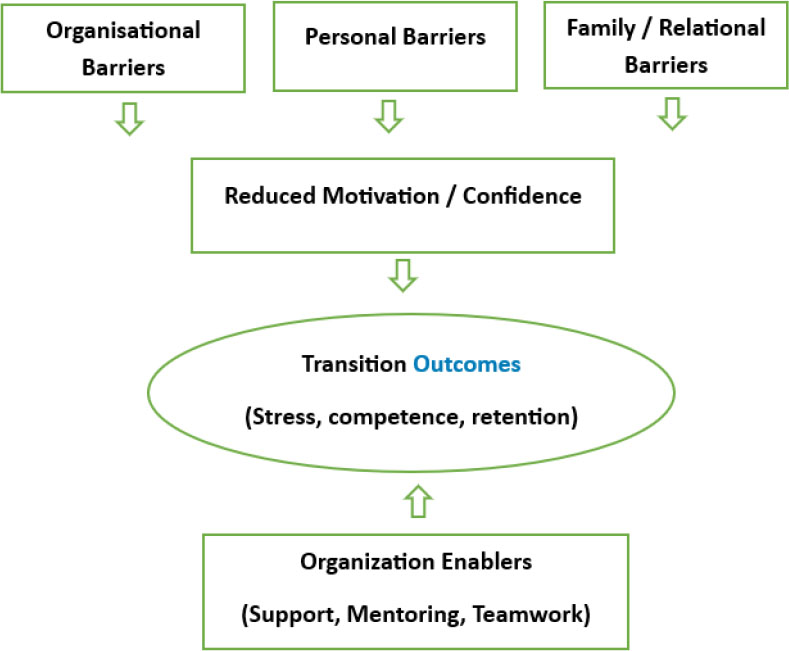
Conceptual model illustrating the relationships among barriers, motivation, and transition outcomes for new graduate nurses in emergency departments.
4.6. Enablers for Effective Transition to Practice
4.6.1. Organisational
NGNs reported receiving various forms of support during their time in the ED, which significantly contributed to their professional growth and overall well-being. These supportive factors included access to ongoing learning opportunities, a positive and inclusive work environment, encouragement and guidance from peers, preceptors, or supervisors, effective communication and collaboration among ED staff, and equitable scheduling and task allocation [3]. NGNs noted that such support not only facilitated the development of their clinical knowledge and skills but also enhanced their confidence in delivering patient care and played a crucial role in preventing burnout. Working in an interactive and supportive environment encouraged NGNs to engage in open communication with supervisors and senior staff. This openness fostered a sense of psychological safety, motivating them to seek guidance, actively participate in clinical learning, and manage patient care with increased competence and assurance. One approach to improving critical thinking skills and better preparing NGNs for the workforce is for educators and preceptors to collaborate in simulated or clinical contexts within undergraduate degree programs to bridge the knowledge-practice gap and enhance critical thinking [30]. Furthermore, nurse managers should assign appropriate workloads to allow NGNs to reflect on clinical challenges, as well as provide ongoing training and evaluation of critical thinking skills [30].
NGNs working under the supervision and assistance of peers and supervisors reported feeling more confident in caring for patients because supervisors guide and assist with patient management, making the practice safer than working alone. These supports alleviated NGNs' concerns and stress, creating a safe environment for the patients they cared for. Working under supervision provides opportunities for learning, as NGNs can reflect on and discuss the results of care with their supervisors [5].
4.6.2. Personal Factors
A comparison of the demographic characteristics revealed that NGNs who had spent more than two months practicing in the ED reported experiencing lower levels of stress compared to those who had less than two months of ED experience. This suggests that increased exposure and time spent in the ED contributed to greater adaptation, confidence, and reduced stress among NGNs.
Exposure to all areas of the ED provided NGNs with valuable learning experiences, helping them develop clinical skills, knowledge, and confidence. Supportive collaboration with senior staff, involvement in high-acuity areas, and fair task and roster allocation further promoted their professional growth in a structured and encouraging environment. These findings are supported by the literature, which demonstrates that being part of a multidisciplinary team increases nursing interns' perceptions of competence and belief in their ability to succeed in clinical settings [1, 31].
4.6.3. Limitations of the Study
This study is part of a Master’s Degree in emergency nursing and faced time and resource constraints that may have affected outcomes using different methods. Limited resources lead researchers to choose more feasible, simpler methods, such as surveys, over in-depth interviews, smaller samples, and less rigorous data collection. It describes the NGN population in Vanuatu, making generalization to other settings difficult.
CONCLUSION
This study emphasizes the importance of structured orientation, proper supervision, and supportive work environments in helping NGNs transition successfully. It also recommends policy changes in pay and oversight to boost retention and performance in EDs.
NGNs often face significant challenges, including fear, stress, heavy workloads, limited supervision, and a lack of proper orientation, which weaken their confidence and clinical skills. However, supportive colleagues, structured learning opportunities, teamwork, and inclusive workplaces greatly enhance their adjustment and professional development. These findings highlight the need for well-designed internship and orientation programs, along with ongoing mentorship and workplace support, especially in high-pressure settings like the ED. Improving these areas can make the transition easier and lead to better patient care outcomes. Although this study was conducted in a specific Pacific Island setting, its results provide valuable insights for nursing practice, workforce planning, and policy development in other low-resource, small-island healthcare systems.
RECOMMENDATIONS
Based on the findings of this study, several key recommendations have emerged, offering a path forward to enhance the transition experience and professional development of NGNs in the ED setting. First and foremost, fostering a supportive learning environment is essential. NGNs require consistent supervision and coaching to ensure they can provide safe and ethical care. Such an environment builds their confidence and reinforces best practices and patient safety standards. In addition, developing a clear induction and orientation policy is highly recommended. This policy should be specifically tailored to the unique demands of the ED, helping new nurses become familiar with the environment, protocols, and workflows. A structured orientation process facilitates a smooth and effective transition from student to practicing nurse. Another important recommendation is the inclusion of NGNs in Continuing Medical Education (CME), training programs, and workshops. These opportunities are vital for ensuring that NGNs receive the ongoing knowledge and skill updates necessary to maintain and enhance their professional competencies. Finally, the study suggests that further research should be conducted to build upon its findings. Future studies may uncover additional insights or address areas not fully explored in this research, thereby contributing to a more comprehensive understanding of NGNs' support needs in the ED. These recommendations, taken together, form a strategic approach to strengthening the development and integration of newly graduated nurses, ultimately improving patient care and team performance in emergency care settings.
AUTHORS’ CONTRIBUTIONS
The authors confirm their contribution to the paper as follows: C.K.: Conceptualization and setting the research goals and aims. Methodology, Focus, and development of research methods. Data curative: Responsible for managing and maintaining the research data, Writing, which includes drafting and editing the manuscript; K.H.: Writing, which includes editing the manuscript and Supervision: overseeing the research process and ensuring quality; S.F.: Writing, which includes editing the manuscript and Supervision: overseeing the research process and ensuring quality. All authors reviewed the results and approved the final version of the manuscript.
LIST OF ABBREVIATIONS
| CHHREC | = College Human Health Research Ethics Committee |
| ED | = Emergency Department |
| CME | = Continuing Medical Education |
| FNU | = Fiji National University |
| MM | = Mixed Method |
| MoH | = Ministry of Health |
| NGN | = New Graduate Nurse |
| NPH | = Northern Provincial Hospital |
| RN | = Registered Nurse |
| VCH | = Vila Central Hospital |
| VHREC | = Vanuatu Health Research & Ethics Committee |
ETHICS APPROVAL AND CONSENT TO PARTICIPATE
Ethical approval for this study was obtained from the Fiji National University Human Health Research Ethics Committee (FNU CHHREC ID: 098.24) and the Vanuatu Ministry of Health Research and Ethics Committee.
HUMAN AND ANIMAL RIGHTS
All procedures performed in studies involving human participants were in accordance with the ethical standards of institutional and/or research committee and with the 1975 Declaration of Helsinki, as revised in 2013.
CONSENT FOR PUBLICATION
Written informed consent was obtained from all participants prior to data collection. Participants were informed of the purpose of the study, confidentiality measures, and their right to withdraw from the study at any time without consequence.
AVAILABILITY OF DATA AND MATERIALS
The data supporting the findings of this study are available from the corresponding author [C.K] upon reasonable request.
ACKNOWLEDGEMENTS
The authors sincerely thank the participating nurses for sharing their time, experiences, and insights, which form the heart of this study. The author also appreciates the teaching institution, Fiji National University, for providing essential resources, the Ministry of Health of Vanuatu for its guidance and support, and the co-authors for their dedication and collaboration in bringing this manuscript to completion.
| Themes | Questions | Options | Frequency | Proportion |
|---|---|---|---|---|
| Barriers | Q4. how often do / did you encounter situations where you feel inadequately prepared when working in ED | Never | 0 | 0% |
| Rarely | 5 | 11% | ||
| Sometimes | 33 | 70% | ||
| Often | 6 | 13% | ||
| Always | 2 | 4% | ||
| Sometimes/Often | 1 | 2% | ||
| Q5. what are some of the barriers you face as an NGN during your transition to the ED | Expectations from hospital management and seniors | 7 | 15% | |
| Self-confidence | 10 | 21% | ||
| Workload | 21 | 45% | ||
| Fears | 15 | 32% | ||
| Knowledge deficit | 16 | 34% | ||
| Lack of support from colleagues | 15 | 32% | ||
| Orientation | 8 | 17% | ||
| Stress | 13 | 28% | ||
| Tiredness/Burnout | 10 | 21% | ||
| Preparation | Q12. On a scale of 1 to 5, How effective do you believe your nursing studies prepared you to work in the ED? | 1 (Not prepared at all) | 0 | 0% |
| 2 | 4 | 9% | ||
| 3 (Adequately) | 17 | 36% | ||
| 4 | 19 | 40% | ||
| 5 (Very well) | 7 | 15% | ||
| Q14. Do you feel that clinical rotations at Nursing college provided sufficient exposure to emergency care scenarios? | Yes | 31 | 66% | |
| No | 12 | 26% | ||
| Somewhat | 4 | 9% | ||
| Q15. What do you think should be incorporated in Nursing college to assist NGNs to feel more prepared and confident working in the ED | Increase clinical practical hours in ED | 38 | 81% | |
| Increase simulation activities with ED focus | 28 | 60% | ||
| Increase theoretical hours with ED focus | 18 | 38% | ||
| Other (check written response) | 4 | 9% | ||
| Supports | Q9. Which of the following supports helped you the most when working in ED? | Support from peers | 25 | 53% |
| Ongoiong learning opportunities | 35 | 74% | ||
| Preceptor/supervisor support | 12 | 26% | ||
| Positive and supportive work environment | 32 | 68% | ||
| Other (check written response) | 2 | 4% | ||
| Q10. How satisfied are you with the level of support provided by your colleagues in the ED? | Very satisfied | 10 | 21% | |
| Satisfied | 28 | 60% | ||
| Neutral | 12 | 26% | ||
| Dissatisfied | 1 | 2% | ||
| Very dissatisfied | 0 | 0% | ||
| Q16. What strategies do you think could be incorporated in ED to assist NGNs to feel more prepared and confident working in the ED | Supervision from a preceptor during your placement in the ED | 35 | 74% | |
| More in-service training | 33 | 70% | ||
| Simulation training in the ED | 24 | 51% | ||
| Other (check written response) | 1 | 2% | ||
| Enablers | Q 8. What enablers do you think have helped facilitate effective transition to working in the ED? | Simulation | 8 | 17% |
| Clinical Practicum | 40 | 85% | ||
| Orientation | 20 | 43% | ||
| Other | 7 | 15% |
| Themes | Subthemes | Codes |
|---|---|---|
| Barriers | Stress, fear and frustration | Fear, mistakes, medication mistakes, not easy, uncooperative patients and relatives, feel panic, loss understanding, fear to lose the pt, stress, confuse. |
| Staffing versus workload | Few nurses work, car accident, workload, too much to do, absentism, a lot of pts, working by yourself, not enough staff, lack of human resources. | |
| Knowledge deficit | Lack of knowledge, little knowledge. | |
| Complaints and lack of cooperation | Drunken patient, not cooperative, influence of alcohol, complaints, complaints NGNs lack knowledge and experience. | |
| Orientation | Not well oriented, | |
| Lack of support | Lack of support from colleagues, colleagues didn’t want to help. | |
| Lack or malfunctioned equipment | Lack of resources, lack of equipment. | |
| Preparation | Nursing studies Adequately prepared NGNs | Came across many thing learned in theory, adequately prepared, help al lot, learn everything, practical was well, nursing studies are effective, some ideas on cases and management, confidence, organize, prioritize. |
| Enablers from the most satisfying aspects of ED | All areas | New cases, build confidence, experience, procedures. |
| Resuscitation room | Stabilize, management, CPR. | |
| Triage room | Differentiate abnormal from normal, prioritize, categorize, experience complaints. | |
| Treatment room | Know different treatments, managements, medications administration, suturing, and skills. | |
| Trauma room | Stabilize of trauma, learn. | |
| Supports, effective communication and cooperation from ED nurses, peers, doctors | Help learn, teach, and build confidence, fair allocation. |