All published articles of this journal are available on ScienceDirect.

Social Media Addiction among Nursing Students as a Partial Mediator between Academic Social Media Use and Life Satisfaction: A Cross-Sectional Study
 iD
Saddam Ahmed Al-Ahdal1
iD
Fatima S. O Ashmieg1
iD
iD
Saddam Ahmed Al-Ahdal1
iD
Fatima S. O Ashmieg1
iD
Authors Info & Affiliations
Abstract
Introduction
Nursing students frequently use social media for both academic engagement and social interaction; however, limited research has explored how different patterns of use influence their life satisfaction, particularly in relation to social media addiction. This study aimed to examine the mediating role of social media addiction among nursing students in the relationship between academic, social media usage, and life satisfaction.
Methods
This cross-sectional study, conducted in line with STROBE guidelines, used validated self-report questionnaires to assess social media use, addiction, life satisfaction, and problematic internet entertainment use among 298 undergraduate nursing students at the University of Al-Razi over the period from April to August 2025. Descriptive statistical analyses were performed to examine patterns and relationships among the variables.
Results
A total of 298 nursing students participated in the study, including 128 males and 170 females, with a mean age of 21.24 ± 1.15 years. Academic use of social media was positively associated with life satisfaction and negatively associated with social media addiction, whereas social and recreational use showed the opposite pattern. Social media addiction was negatively related to life satisfaction and partially mediated the relationship between different types of social media use and life satisfaction. Notably, entertainment-related use demonstrated the strongest association with addiction and indirectly reduced life satisfaction.
Discussion
These results imply that social media addiction significantly mediates the relationship between nursing students' social media usage patterns and life satisfaction. While excessive recreational and entertainment use may harm life satisfaction through increased addiction, academic use seems to be beneficial for well-being. Encouraging thoughtful, balanced social media use may improve students' academic performance and psychological health.
Conclusion
The association between social media usage patterns and life satisfaction among nursing students is partially mediated by social media addiction. These results, which highlight the importance of encouraging balanced, academically focused social media use to promote student well-being, are more transparent and methodologically rigorous when STROBE recommendations are followed.
1. INTRODUCTION
Social media has become an essential tool for student communication, providing platforms for information sharing, collaboration, and academic discussion. Its widespread use has increased interest in its impact on mental health, as excessive engagement has been associated with negative outcomes such as anxiety and depression [1]. At the same time, social media serves as a valuable resource for accessing up-to-date information and supporting continuous learning, particularly among university students. The rapid expansion of social media, especially during the COVID-19 pandemic, has significantly reshaped students’ lifestyles and communication patterns, increasing reliance on digital platforms for both academic and social interactions [2]. This transformation has prompted growing research interest in understanding how different patterns of social media use influence academic performance and psychological well-being [3].
However, excessive and uncontrolled use may lead to social media addiction, characterized by a compulsive need to engage with platforms at the expense of other life domains. Such behaviour has been linked to neuropsychological mechanisms similar to those involved in addictive processes [4]. Given the pervasive use of social networking sites among university students, it is important to distinguish between purposeful academic use and potentially harmful patterns of engagement that may negatively affect daily functioning and mental health [5, 6].
Social media addiction has become a prevalent issue among contemporary youth. Although many young individuals adopt various coping strategies, these approaches are often superficial [7]. Recent data indicate that the popularity of social networking sites among adolescents has increased in response to stringent COVID-19 pandemic containment measures, social isolation, and lockdowns implemented in several countries [8]. In this context, social media has emerged as an essential aspect of daily life, particularly for children and adolescents [9]. Social media platforms are now used not only for entertainment and social interaction but also for opinion exchange, education, networking, and collaborative projects [10]. Furthermore, research has demonstrated that higher levels of social media addiction are associated with lower levels of happiness and life satisfaction [11]. Social media addiction is considered a significant predictor of life satisfaction. Individuals addicted to social media are more likely to engage in and tolerate virtual interactions [12].
The mere use of social media does not reliably predict user satisfaction; instead, factors such as ease of use, opportunities for collaboration, and alignment with educational objectives are critical [13]. Social media platforms may also foster creativity and intrinsic motivation among students, thereby enhancing academic engagement [14]. Studies examining the relationship between social media use and subjective well-being have produced mixed findings. Some research indicates that social media can improve well-being by facilitating social connections and providing emotional support [5]. In contrast, other studies report that excessive social media use may contribute to increased loneliness, anxiety, and depression [2]. This relationship is further complicated by variables such as the quality of online interactions, the type of content consumed, and individual differences in personality and social behaviour [9].
Social media exerts a range of effects on college students’ health. It can strengthen social connections and support networks, reduce loneliness, and improve mental well-being. However, negative consequences include anxiety resulting from social comparison, fear of missing out (FoMO), disrupted sleep patterns, cyberbullying, and harassment [6]. Higher education institutions have adopted social media to engage students, presenting both opportunities and challenges. Analyzing student social media trends and investing in research can improve engagement, communication, support, and reputation management. Continuous adaptation and innovation are essential for maintaining institutional relevance [15]. Nursing students engage in various social media activities, including active participation (e.g., creating, posting, commenting, and messaging) and passive participation (e.g., scrolling, browsing, lurking, and monitoring), to address psychological and social needs associated with the unique stressors of nursing education [1].
The effects of social media use on life satisfaction vary depending on usage patterns, particularly active versus passive engagement, and are influenced by factors such as perceived social support and social comparison [16]. Emerging evidence suggests that the relationship between social media use and life satisfaction may be mediated by social media addiction. Nursing students, who often experience elevated levels of stress, anxiety, and depression, may be particularly vulnerable to developing maladaptive patterns of social media use, which can adversely affect their overall life satisfaction [5].
This study is theoretically grounded in the integration of Social Cognitive Theory and Uses and Gratifications Theory. These frameworks explain how individuals engage with social media to fulfil specific needs and how such engagement shapes behavioural and psychological outcomes. Within this context, academic social media use is conceptualized as a purposeful and goal-oriented activity that may enhance academic engagement and well-being [11]. However, excessive or uncontrolled use may lead to social media addiction, a maladaptive behavioural pattern that negatively impacts life satisfaction. Accordingly, social media addiction is hypothesized to act as a partial mediator in the relationship between academic social media use and life satisfaction among nursing students. This integrated framework provides a coherent model linking usage patterns, behavioural responses, and psychological well-being.
1.1. Research Hypothesis
H1: Academic social media use is significantly associated with life satisfaction among nursing students.
H2: Academic social media use is significantly associated with social media addiction.
H3: Social media addiction is significantly associated with life satisfaction.
H4: Social media addiction partially mediates the relationship between academic social media use and life satisfaction.
To examine the mediating role of social media addiction in the relationship between academic social media use and life satisfaction among nursing students.
2. METHODS
2.1. Design and Settings
A descriptive study design was used to examine the relationships among social media use, social media addiction, and life satisfaction at Al-Razi University, Sanaa, Yemen.
2.2. Participants and Sampling
A convenience sample of 298 nursing students was recruited from Al-Razi University, including 128 males and 170 females. Participants’ ages ranged from 19 to 24 years (mean = 21.24, SD = 1.15). Data were collected over the period from April to August 2025. A priori sample size calculation was conducted using G*Power software. Based on a small-to-medium effect size (f2 = 0.05), a significance level of α = 0.05, and statistical power of 0.80, the minimum required sample size was estimated to be 262 participants. In addition, recommendations for Structural Equation Modeling (SEM) generally suggest a sample exceeding 200 participants to ensure stable parameter estimation and adequate statistical power. Therefore, the final sample of 298 nursing students exceeded the recommended minimum sample size and was considered sufficient to support the planned mediation and path analyses conducted in this study.
All participants included in this study were internship nursing students at Al-Razi University. Therefore, the sample was academically homogeneous with respect to year of enrollment and level of clinical training. Consequently, the potential confounding effect associated with differences across academic years was minimized. The inclusion criteria comprised undergraduate nursing internship students enrolled at Al-Razi University, aged 20 years or older, actively using social media platforms, and willing to participate voluntarily in the study. Students who submitted incomplete questionnaires or were not regularly enrolled during the data collection period were excluded from the study.
2.3. Tools of Data Collection
Data were collected through a structured, standardized, and confidential self-administered questionnaire during April and September 2025. It is composed of four main, reliable sections:
2.3.1. Tool I: Social Media Usage Questionnaire
Researchers developed the Social Media Usage Questionnaire to measure the purposes of social media use among university students in the Yemeni context. The first draft of the Questionnaire had 31 items, which measured three social media uses: Academic use (9 items), Social use (10 items), and Entertainment Use (12 items). A 5-point Likert scale was used, ranging from 1 (strongly disagree) to 5 (strongly agree). The Questionnaire was developed after reviewing the literature of studies measuring social media usage [13], for social use [6], for entertainment use [14], and for academic use [9]. The first draft was reviewed by 7 experts, who critically examined the 31 items for suitability and relevance to university students' social media use in KSA. Only those items retained for the second draft had at least 80% agreement among experts regarding their relevance. The experts believed that the remaining 24 items were entirely satisfactory and relevant for measuring university students' social media use in KSA (8 items for academic use, 8 for social use, and 8 for entertainment use).
Using SPSS Amos 22, a confirmatory factor analysis was applied to the three-factor structure of the Social Media Usage Questionnaire using the Maximum Likelihood method (Fig. 1). The indices of the model were (CMIN/DF=1.124, Comparative Fit Index (CFI) =.995, Goodness Fit Index (GFI) =.943, AGFI=.913, Root Mean Square of Approximation (RMSEA) =.020, and Chi-square=222.50 (p=0.112).
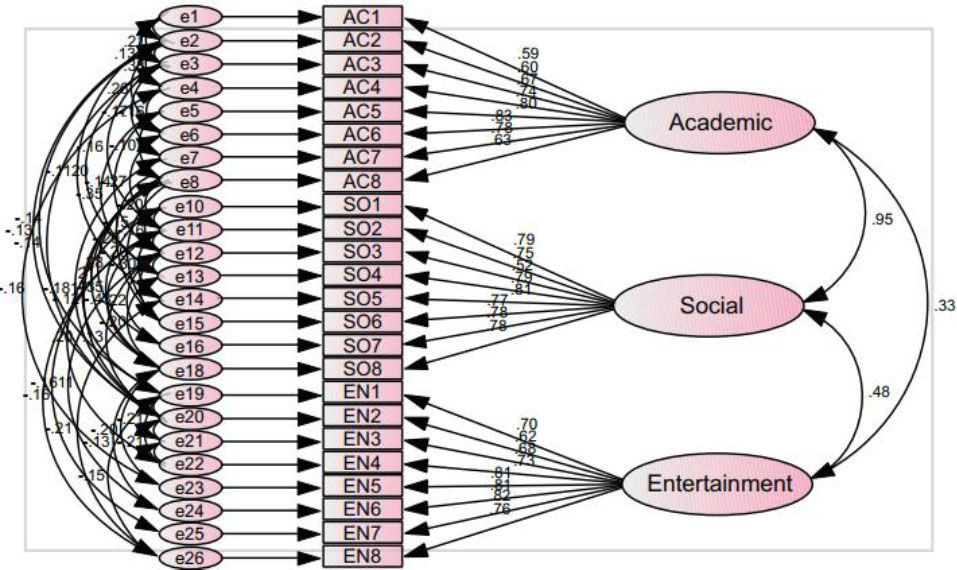
Confirmatory factor analysis of the social media usage questionnaire.
Cronbach`s alpha is used to measure the reliability of the Social Media Usage Questionnaire [16]. The Cronbach`s alpha coefficients were .899 for the academic use dimension, .907 for social use, .916 for entertainment use, and .941 for the Social Media Usage Questionnaire. Pearson`s coefficient of correlation was also used to ensure the internal consistency of the Social Media Usage Questionnaire, which revealed that the correlation between each item and its dimension was positive and significant at .01level, and ranged between 0.669 and 0.853. The correlation between each dimension or use and the total score of the questionnaire was positive and significant at .01 level and ranged between 0.735 and 0.91.
Finally, after verifying validity and reliability, the Social Media Usage Questionnaire consisted of 24 items, that measured three social media uses: Academic use (8 items), for example, ” I use social media to solve my academic problems” and ” I communicate with my friends on social media to prepare for the exam, Social use (8 items), example” I use social media sites to communicate with my relatives “, ” Use social media sites to obtain information regarding ongoing social events “, and Entertainment Use (8 items), example ” The main means of entertainment are online video games or social media sites” ” I prefer online video games or social media sites to be with my friends”. A 5-point Likert scale was utilized, which ranged from 1 (strongly disagree) to 5 (strongly agree).
2.3.2. Tool II: The Bergen Social Media Addiction Scale
The Bergen Social Media Addiction Scale (BSMAS), adapted from the Bergen Facebook Addiction Scale [17], consists of 6 items rated on a 5-point Likert scale ranging from 1 (very rarely) to 5 (very often). The BSMAS applies the six core addiction elements (salience, mood modification, tolerance, withdrawal, conflict, and relapses) proposed to assess the experience of using social media over the last year [18]. A higher score of the BSMAS indicates a stronger addiction to social media, and a BSMAS score over 19 indicates an individual is at risk of developing problematic social media use [19]. Moreover, the BSMAS has been identified as a one-factor solution, with measurement invariance supported across gender in an Italian sample [20].
Using SPSS Amos 22, a confirmatory factor analysis was applied to the BSMAS factor structure using the Maximum Likelihood method (Fig. 2). The indices of the model were (CMIN/DF=1.126, Comparative Fit Index (CFI) =.998, Goodness Fit Index (GFI) =.989, AGFI=.970, Root Mean Square of Approximation (RMSEA) =.030, and Chi-square=10.085 (p=0.259).
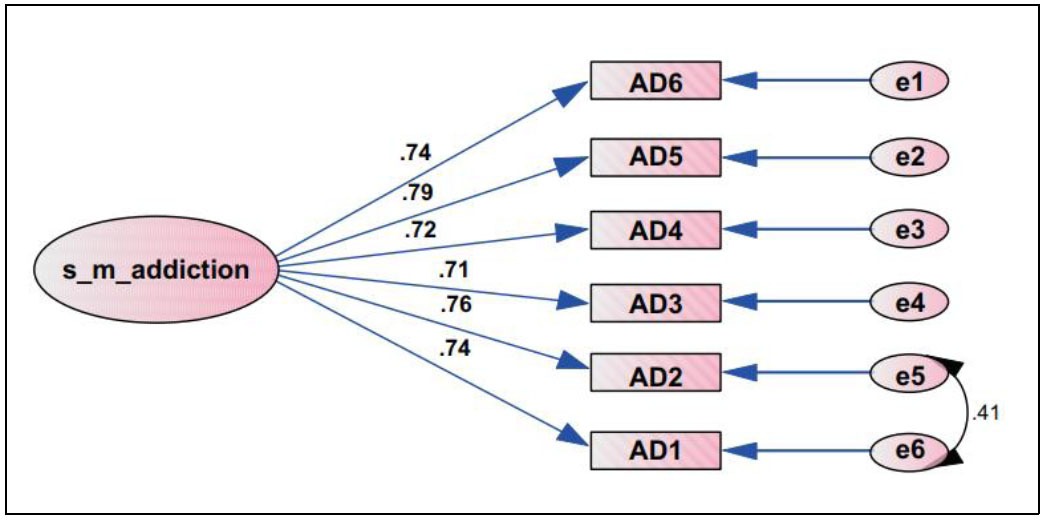
Confirmatory factor analysis of the bergen social media addiction scale.
Cronbach`s alpha is used to measure the internal consistency among the items and the reliability of the BSMAS. The Cronbach`s alpha coefficient was .884 for the scale. Pearson`s coefficient of correlation was also used to ensure the internal consistency of the BSMAS, which ranged between .759 and .826.
2.3.3. Tool III: Satisfaction with Life Scale
It is a scale that measures the cognitive component of subjective well-being using five Likert-type items grouped into a one-dimensional construct [21]. The best-known and most widely used measure, for this purpose, is the Satisfaction with Life Scale (SWLS). It is a five-item Likert-type scale with very good psychometric properties, both in terms of reliability and validity. Regarding its reliability, as internal consistency, it usually presents values that range between .79 and .89 and the rank in item-total correlations usually ranges from .51 to .80. Regarding the factorial structure, it is a one-dimensional scale, and studies find a single factor that explains 60% -75% of the total variance. This scale has also been applied to population samples with very diverse characteristics, such as prisoners, cloistered nuns, pathological people, and different types of professionals or the unemployed.
In this study, the confirmatory factor analysis used SPSS Amos 22 and applied the one-factor structure of SWLS using the Maximum Likelihood method (Fig. 3). The indices of the model were (CMIN/DF = 3.066, Comparative Fit Index (CFI) = 1.00, Goodness-of-Fit Index (GFI) = .996, AGFI = .980, Root Mean Square of Approximation (RMSEA) =.009, and Chi-square=1.022.
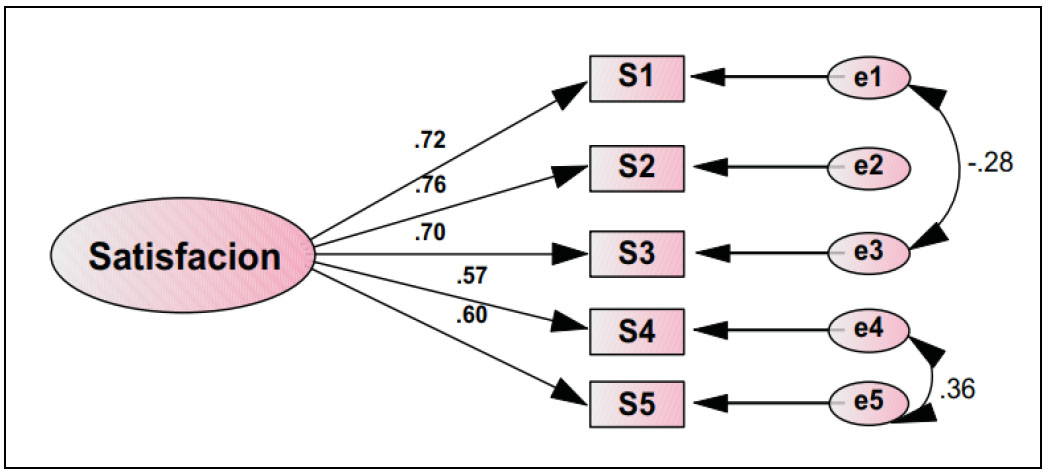
Confirmatory factor analysis of the satisfaction with life scale.
Cronbach`s alpha is used to measure the internal consistency among the items and the reliability of the SWLS. The Cronbach`s alpha coefficient was .804 for the scale. Pearson`s coefficient of correlation was also used to ensure the internal consistency of the SWLS, which ranged between .706 and .780.
2.3.4. Tool IV: The British Adaptation of the Problematic Internet Entertainment Use Scale
The British Adaptation of the Problematic Internet Entertainment Use Scale for Adolescents [22]. It serves as a tool for evaluating symptoms of internet addiction among adolescents in the British context. This 30-item scale encompasses eight distinct symptoms, namely preoccupation, withdrawal, tolerance, loss of control, persistence despite adverse consequences, conflict, escapism, and other motivational aspects. Respondents rate each item on a 7-point Likert scale, ranging from 1 (indicating strong disagreement) to 7 (indicating strong agreement). The total summative score of the Psychometric Internet Addiction Evaluation USA (PIEUSA) scale ranged from 30 to 210. The scale is classified into three different levels: the range of 0 to 30 indicates normative internet usage with negligible or absent indications of problematic behavior; 31 to 79 signifies a moderate degree of problematic internet usage typified by observable symptoms suggestive of behavioral addiction to online gaming and social media platforms, while scores greater 79 denote a pronounced level of problematic internet utilization. Derived from the original Problematic Internet Entertainment Use Scale for Adolescents [23] in Spanish, the British adaptation underwent translation and validation processes. In an assessment of a cohort of English-speaking adolescents, the adapted scale exhibited commendable reliability and satisfactory construct validity, with its factor analysis indicating unidimensionality. Notably, the factor related to “Internet Entertainment Use Among British Adolescents” accounted for 41.5% of the total variance in the data.
2.4. Results/ Data Analysis
To answer the study questions, Path analysis structural equation modeling in Amos 22 was used with the maximum likelihood method and bootstrapping (Fig. 4).
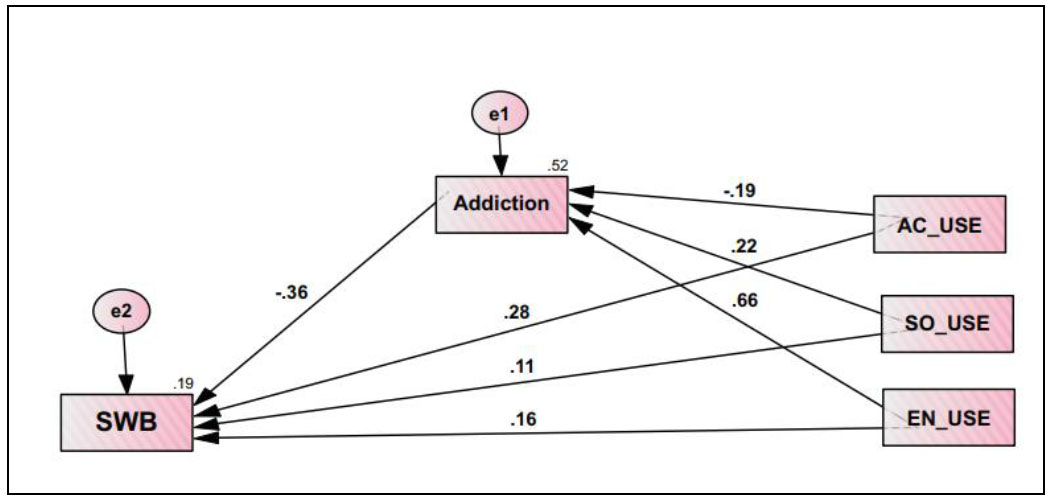
The standardized estimates of the direct effects of the research model result.
The direct effects of social media usage on social media addiction:
The academic use of social media addiction: Is there a significant direct effect of academic usage of social media on social media addiction among nursing students at the University of Al-Razi?
The results in Table 1 revealed that the path coefficient of academic usage of social media on social media addiction is significant (β=-.168, C.R.=4.785, and p<.05), which indicates that there is a significant direct negative effect of academic usage of social media on social media addiction among nursing students.
| Path | Std. Estimate | Estimate | S.E. | C.R. | p | ||
|---|---|---|---|---|---|---|---|
| AC._USE |

|
Addiction | -.193 | -.168 | .035 | -4.785 | 0.001 |
| SO._USE |
|
Addiction | .217 | .162 | .030 | 5.381 | 0.001 |
| EN. _USE |
|
Addiction | .658 | .395 | .024 | 16.317 | 0.001 |
| Addiction |
|
Life Satisfaction | -.358 | -.217 | .046 | -4.763 | 0.001 |
| AC._USE |
|
Life Satisfaction | .281 | .148 | .029 | 5.182 | 0.001 |
| SO._USE |
|
Life Satisfaction | .108 | .049 | .025 | 1.974 | .048 |
| EN. _USE |
|
Life Satisfaction | .156 | .057 | .026 | 2.166 | .030 |
The social use of social media addiction: Is there a significant direct effect of social use of social media on social media addiction among nursing students at the University of Al-Razi?
As shown in Table 1, the path coefficient of social use of social media on social media addiction is significant (β=.162, C.R.= 5.381, and p<.05), which indicates that there is a significant direct positive effect of social use of social media on social media addiction among nursing students.
Entertainment use on social media addiction: Is there a significant direct effect of the entertainment use of social media on social media addiction among nursing students at the University of Al-Razi?
As shown in Table 1, the path coefficient of entertainment use of social media on social media addiction is significant (β=.395, C.R. 16.317, and p<.05), which indicates that there is a significant direct positive effect of entertainment use of social media on social media addiction among nursing students.
The direct effect of social media usage on life satisfaction:
The academic use of life satisfaction: Is there a significant direct effect of academic use of social media on life satisfaction among nursing students at the University of Al-Razi?
As shown in (Table 1 and Fig. 2), the path coefficient of academic use of social media on life satisfaction is significant (β=.148, C.R. 5.182, and p<.05), which indicates that there is a significant direct positive effect of academic use of social media on life satisfaction among nursing students. Academic social media use had a significant positive effect on life satisfaction (β = 0.32, p < 0.01).
The social use of life satisfaction: Is there a significant direct effect of social use of social media on life satisfaction among nursing students at the University of Al-Razi?
As shown in (Table 1 and Fig. 3), the path coefficient of social use of social media on life satisfaction is significant (β=.049, C.R.= 1.974, and p<.05), which indicates that there is a significant direct positive effect of social use of social media on life satisfaction among nursing students.
The entertainment use on life satisfaction: Is there a significant direct effect of the use of social media entertainment on life satisfaction among nursing students at the University of Al-Razi?
As shown in (Table 1), the path coefficient of entertainment use of social media on life satisfaction is significant (β=.057, C.R. 2.166, and p<.05), which indicates that there is a significant direct positive effect of entertainment use of social media on life satisfaction among nursing students. Social media addiction was negatively associated with life satisfaction (β = −0.28, p < 0.01).
The direct effect of social media addiction on life satisfaction: Is there a significant direct effect of social media addiction on life satisfaction among nursing students at the University of Al-Razi?
As shown in Table 1, the path coefficient of social media addiction on life satisfaction is significant (β=-.217, C.R.=-4.763, and p<.05), which indicates that there is a significant direct negative effect of social media addiction on life satisfaction among nursing students.
The indirect effects of social media usage on life satisfaction through social media addiction as a mediator:
Is there a significant indirect effect of academic use of social media on life satisfaction among nursing students at the University of Al-Razi through social media addiction as a mediator?
As shown in Table 2, there was a significant positive indirect effect of academic use of social media on life satisfaction through social media addiction (β=.069, and p<.05). These results show that social media addiction can be a partial mediator in the relation between academic use and life satisfaction among nursing students at the University of Al-Razi. The indirect effect was significant (β = −0.13, 95% CI [−0.21, −0.06]), confirming partial mediation.
| Paths | Estimate | Bounds | p | |||
|---|---|---|---|---|---|---|
| Lower | Upper | |||||
| AC_USE | Addict | Life Satisfaction | .069 | .038 | .127 | 0.002 |
| SO_USE | addict. | Life Satisfaction | -.078 | -.143 | -.043 | 0.001 |
| EN_USE | addict | Life Satisfaction | .235- | -.327 | -.148 | 0.001 |
Is there a significant indirect effect of social use of social media on life satisfaction among nursing students at the University of Al-Razi through social media addiction as a mediator?
As shown in Table 2, there was a significant negative indirect effect of social use of social media on life satisfaction through social media addiction (β= -.078, and p<.05). These results show that social media addiction can be a partial mediator in the relation between social use and life satisfaction among nursing students at the University of Al-Razi.
Is there a significant indirect effect of entertainment use of social media on life satisfaction among nursing students at the University of Al-Razi through social media addiction as a mediator?
As shown in Table 2, there was a significant negative indirect effect of entertainment use of social media on life satisfaction through social media addiction (β= -.235, and p<.05). These results show that social media addiction can be a partial mediator in the relation between entertainment use and life satisfaction among nursing students at the University of Al-Razi. Also, entertainment use had an indirect negative effect on life satisfaction through social addiction, which was the highest (β= -.235) in comparison with social use (β= -.078) and academic use (β= -.069).
2.5. Statistical Analysis
To address the study objectives, a path analysis using Structural Equation Modeling (SEM) was conducted in IBM SPSS AMOS version 22, using the maximum likelihood estimation method. Bootstrapping procedures were also performed to assess the significance of indirect effects. The results are presented in the following tables and figures. clarify more based on these study findings.
3. DISCUSSION
The present study demonstrated a significant negative association between academic use of social media and social media addiction among nursing students at the University of Al-Razi. When social media is used primarily for academic purposes, engagement tends to be more focused and goal-directed, which may limit exposure to non-academic browsing and reduce the risk of addictive patterns. Academic activities such as accessing educational resources, participating in academic discussions, and collaborating on coursework may also support better time management and discourage aimless scrolling, often linked to problematic use. Additionally, academic use can provide positive reinforcement; students who experience improved academic outcomes or effective collaboration may perceive social media as a productive educational tool rather than a distraction. This interpretation aligns with other findings [24], which suggest a nuanced relationship between social media use and academic achievement, where educational use may be beneficial despite concerns about excessive exposure. However, contrasting evidence from other related studies [25, 26] indicates that even academically oriented social media use, when excessive, may contribute to addictive behaviors, reduce study time, impair concentration, and ultimately negatively affect academic performance.
Beyond academic implications, social media addiction has been consistently associated with adverse mental health outcomes, including anxiety, depression, and stress. Nursing students, who often experience substantial academic and clinical pressures, may be particularly susceptible to these effects. Aslan and Polat [27] reported that compulsive checking behaviors can disrupt sleep quality and overall well-being, potentially compromising both academic performance and psychological health. Such patterns may shift students’ priorities toward online engagement rather than academic responsibilities, resulting in reduced classroom participation and diminished academic achievement [28]. further emphasized that these behavioral shifts may have long-term consequences for students’ educational progression and professional development.
In contrast to academic use, the present findings also revealed a significant positive association between social use of social media and social media addiction. Social media platforms are intentionally structured to maximize interpersonal interaction and user engagement, which may encourage frequent use as students attempt to maintain social connections. The persistent need to remain socially updated has been identified as a contributor to addictive patterns [29]. Moreover, immediate psychological rewards, such as likes, comments, and social feedback, may reinforce repeated engagement and foster reliance on social validation for self-esteem. Over time, this reinforcement cycle may increase susceptibility to social media addiction [30].
Nursing students often endure significant amounts of stress and pressure. Social networking can be a means of relaxation and unwinding, offering an escape from the obligations of academic life. However, when students utilize social media as a stress reliever, this can also result in excessive use and addiction [11]. Students may check and interact with social media regularly out of concern of losing out on social events, updates, and interactions. This ongoing involvement may raise the chance of acquiring addictive habits that are clarified by other studies [29]. Furthermore, the current study revealed a significant direct positive effect of the entertainment use of social media on social media addiction among nursing students at the University of Al-Razi. There is a significant direct positive effect of entertainment use of social media on social media addiction among nursing students at the University of Al-Razi. From the researcher’s point of view, nursing students frequently experience significant amounts of stress because of their rigorous academic commitments. Social media platforms offer simple and convenient means of relieving stress through social interactions, movies, and memes. Quick habit formation from this escape can result in increased use and even addiction. Social media entertainment material aims to be interesting and bring users immediate satisfaction.
Students may develop addictive behaviors because of consistently seeking out positive incentives, such as likes, shares, and engaging content, which can cause a cycle of dependency. According to a comprehensive study and meta-analysis, 18.4% of college students worldwide suffer from social media addiction, with greater percentages seen in Asian nations. Another study revealed that this suggests that this problem affects a sizable section of the student body [31]. Excessive recreational use of social media has been associated with poorer academic performance. Nursing students who engage heavily in non-academic social media activities often demonstrate reduced academic focus and achievement [29]. This pattern may reflect compulsive use, a defining feature of social media addiction, which can negatively affect daily functioning, relationships, and psychological well-being. Other findings stated that the demand for amusement and escape frequently fuels this compulsive behavior [32].
On the other hand, there is a significant direct positive effect of academic use of social media on life satisfaction among nursing students at the University of Al-Razi. A previous study presented that, in addition to offering access to a multitude of educational resources, social media platforms promote collaborative learning. Discussions, knowledge sharing, and project collaboration are all opportunities for students to improve their academic performance and learning process [33]. Social media use for academic purposes promotes a sense of community and support by keeping students in touch with their teachers and peers. Prior study mentioned that increased life satisfaction can result from this connectedness's ability to reduce stress and feelings of loneliness [34]. Students can join academic groups and network with experts. Foroughi et al., illustrated that these possibilities can improve their life satisfaction and job prospects [35].
From the results, it is clear that there is a significant direct negative effect of social media addiction on life satisfaction among nursing students at the University of Al-Razi. Social media addiction frequently results in procrastination and a loss of concentration during studying. Academic achievement may suffer as a result, which may affect general life satisfaction. Related study clarified that A vicious cycle of tension and discontent can be brought on by subpar academic performance [33]. Paradoxically, excessive usage of social media can result in feelings of social isolation and loneliness, even if it is a tool for social interaction. This is due to the possibility that online connections could take the place of in-person interactions, creating a feeling of alienation from relationships in real life. Lowered self-esteem and problems with body image might result from constantly comparing oneself to others on social media. Students who have poor self-perception may feel less accomplished or incompetent than their peers, which can drastically lower life happiness. A previous study presented that addiction to social media frequently results in poor sleep hygiene, which includes shorter and lower-quality sleep. Sleep deprivation can have negative effects on mental health and general well-being, which further reduces life pleasure [6].
Also, the current study revealed that there was a significant positive indirect effect of academic use of social media on life satisfaction through social media addiction. These results show that social media addiction can be a partial mediator in the relationship between academic use and life satisfaction among nursing students at the University of Al-Razi. Using social media for academic purposes frequently necessitates regular platform interaction. The previous finding stated that habitual use brought on by this heightened engagement may turn into addiction [36]. Social media addiction may carry significant emotional and psychological consequences, including heightened stress and anxiety, which can offset the potential benefits of academic-related use [3]. Although academic social media engagement may directly enhance life satisfaction, its positive impact appears partially diminished when addictive patterns emerge. This dual effect highlights the importance of regulating social media use to maximize its educational benefits while minimizing associated risks [29]. Understanding this mediating relationship is essential for designing interventions that promote balanced and healthy social media use among students.
In addition, there was a significant negative indirect effect of social use of social media on life satisfaction through social media addiction. These results show that social media addiction can be a partial mediator in the relationship between social use and life satisfaction among university students in medical colleges. Addiction to social media can result in elevated levels of stress, anxiety, and depression, even though it can offer social support. The initial beneficial impacts of social use on life satisfaction may be lessened by these detrimental psychological repercussions [37]. Ironically, excessive social media use can result in social isolation and loneliness. This is due to the possibility that online connections could take the place of in-person interactions, creating a feeling of alienation from relationships in real life [6]. Ostic et al. said that social media use can first improve life satisfaction by offering chances for community, emotional support, and social engagement. However, excessive social media use may lead to addictive behaviors, which can negatively affect overall life satisfaction [38].
Understanding this mediating effect is important for developing interventions that encourage healthier social media use among students. The findings suggest a complex relationship between nursing students’ social media use and life satisfaction. While social media can enhance life satisfaction by facilitating emotional support, communication, and social connection, excessive use may lead to addictive behaviors that ultimately reduce well-being. In this context, social media addiction appears to act as a partial mediator, linking excessive use with lower life satisfaction through increased psychological distress, social withdrawal, and reduced self-esteem. Recognizing this dynamic is essential for designing effective strategies that help students benefit from the positive aspects of social media while minimizing its risks. Creating supportive digital environments through education, institutional guidance, and appropriate policies may therefore play a key role in promoting balanced and responsible social media use among students.
4. STUDY LIMITATIONS
This study has several limitations that should be considered when interpreting the findings. First, due to the cross-sectional design, causal inferences between academic social media use, social media addiction, and life satisfaction cannot be established. Second, the use of a convenience sampling technique from a single institution (Al-Razi University) may introduce selection bias and limit the external validity and generalizability of the results. Third, data were collected using self-administered questionnaires, which may be subject to information bias, including recall bias and social desirability bias. Furthermore, although key variables were examined, residual confounding cannot be excluded, as factors such as academic performance, mental health status, and socioeconomic background were not fully adjusted for in the analysis. In addition, the mediation analysis was based on cross-sectional data, which should be interpreted with caution as it does not confirm temporal or causal pathways.
CONCLUSION
The study revealed that there is a strong and significant relationship between social media utilization, social media addiction, and life satisfaction among nursing students at the study setting. While academic and social uses can improve life satisfaction by providing various educational resources, social interaction, and emotional support, these values are often challenged by the negative impacts of social media addiction. Social media addiction, often accompanied by increased psychological distress, social isolation, and reduced self-esteem, appears to partially mediate the relationship between social media use and life satisfaction, weakening its potential positive effects. These findings highlight the dual nature of social media: while it can serve as a useful platform for academic engagement and social connection, its addictive potential may pose notable risks to students’ overall well-being.
Current and Future Development
1. Education and Awareness Programs: Implement educational programs to raise awareness about the risks of social media addiction and promote healthy usage habits. These programs should focus on the signs of addiction and strategies to manage social media use effectively.
2. Support Systems: Establish support systems within universities, such as counseling services and peer support groups, to help students manage stress and avoid excessive social media use. These systems can provide emotional support and practical advice on balancing social media use with academic responsibilities.
3. Monitoring and Regulation: Develop tools and policies to monitor and regulate social media use in academic settings. This could include setting limits on social media usage during study hours and encouraging offline activities that promote face-to-face interactions.
4. Promote Balanced Use: Encourage students to use social media in a balanced way that maximizes its benefits while minimizing its risks. This includes promoting academic and professional uses of social media and discouraging excessive use for entertainment and social validation.
5. Further Research: Conduct further research to explore the long-term effects of social media addiction on life satisfaction and academic performance. This research should also investigate the effectiveness of different interventions in reducing social media addiction and improving students’ well-being.
AUTHORS’ CONTRIBUTIONS
All authors made a significant contribution to the work reported, whether that is in the conception, study design, execution, acquisition of data, analysis and interpretation, or in all these areas; took part in drafting, revising or critically reviewing the article; gave final approval of the version to be published; have agreed on the journal to which the article has been submitted; and agree to be accountable for all aspects of the work.
LIST OF ABBREVIATIONS
| A.C.U.S.E. | = Academic Use of Social Media |
| S.O.U.S.E. | = Social Use of Social Media |
| E.N.U.S.E. | = Entertainment Use of Social Media |
| Std. Estimate | = Standardized Estimate |
| Estimate | = Unstandardized Estimate |
| S.E. | = Standard Error |
| C.R. | = Critical Ratio |
| P | = Probability Value (p-value) |
| Addiction | = Social Media Addiction. |
ETHICS APPROVAL AND CONSENT TO PARTICIPATE
This study obtained ethical approval from the Ethics Committee at Al-Razi University, Yemen, dated 09/04/2025 (Ref: RU/13/FMHS/2025). This information has been clearly stated in the manuscript.
HUMAN AND ANIMAL RIGHTS
All human research procedures followed were in accordance with the ethical standards of the committee responsible for human experimentation (institutional and national), and with the Helsinki Declaration of 1975, as revised in 2013.
CONSENT FOR PUBLICATION
Written informed consent was obtained from all participants prior to their participation in the study.
AVAILABILITY OF DATA AND MATERIALS
The data supporting the findings of this study are available from the corresponding author [M.G.E] upon reasonable request.
ACKNOWLEDGEMENTS
The authors also extend their sincere appreciation to the nursing students who voluntarily participated in this research for their time, cooperation, and valuable contributions, which were essential to the successful completion of the study.